The noise types
Perlin-style gradient noise interpolates random gradients on a square lattice with a quintic fade. Simplex noise uses a triangular lattice, which avoids the square-grid look. Value noise interpolates random values and looks blockier. Worley (cellular) noise measures the distance to the nearest scattered feature point. White noise is independent per pixel: every pixel is a hash of its coordinates and the seed.
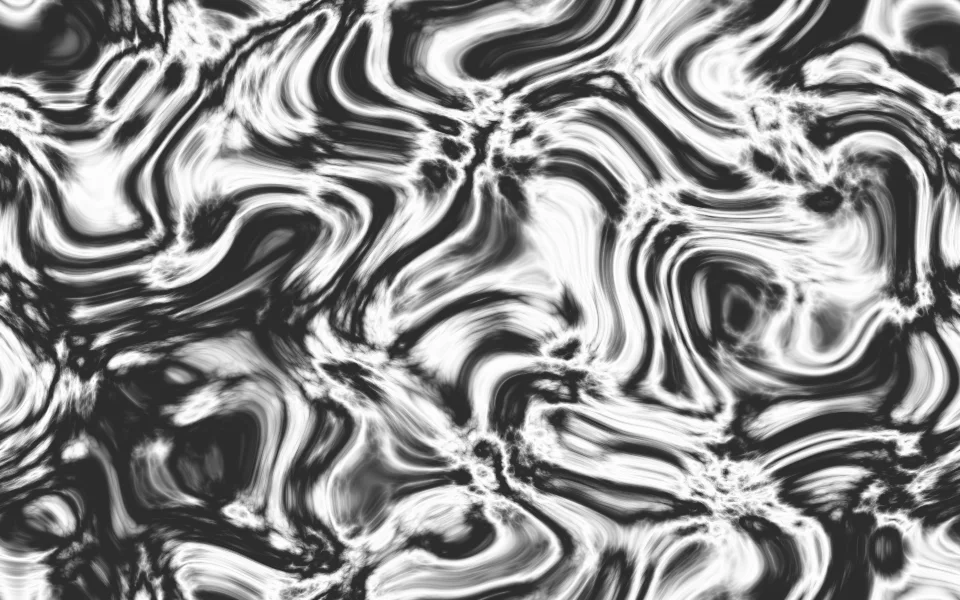
Fractal modes add octaves, each at double the frequency and a fraction of the amplitude: fBm for clouds and terrain, ridged for sharp crests, turbulence for billowy marble-like detail. Domain warp feeds noise into the coordinates of more noise for swirled, liquid shapes.
For shaders, heightmaps and textures
Greyscale output works as a heightmap, a displacement or roughness map, or a mask. Palette ramps map the noise to colours sorted by lightness. Turn on Seamless to make the image tile (see the seamless texture generator for recipes built for that). Scale is measured in lattice cells across the image, so a seed keeps its structure at every resolution.
Reproducible by design
Every image comes from a seed. The address bar holds the generator, the seed, the size and only the settings you changed, so the link redraws the exact same picture on any device. That is useful for picking up where you left off, sending someone a design, or regenerating a file at a bigger size later. See how it works.